

GE Profile microwave convection ovens blend speed and versatility‚ offering manuals for models like PEB7227DL and JVM1790SKC01‚ ensuring optimal performance.
These appliances‚ detailed in installation guides (PVM1790SRSS) and owner’s manuals‚ provide comprehensive cooking solutions for modern kitchens.
Overview of the GE Profile Series
The GE Profile series represents a premium line of kitchen appliances‚ including advanced microwave convection ovens detailed in numerous manuals like those for models JVM1790SKC01 and PVM1790SRSS.
These ovens combine microwave speed with convection’s even baking‚ offering versatile cooking. Manuals cover installation‚ operation‚ safety‚ and troubleshooting‚ ensuring users maximize features like sensor cooking and convection roast. GE’s commitment to innovation is evident in these user-friendly designs.
Key Features and Benefits
GE Profile microwave convection ovens‚ as outlined in their manuals (PEB7227DL‚ JVM1790SKC01)‚ boast sensor cooking for optimal results and convection for even baking.
Benefits include speed‚ versatility‚ and precise temperature control. Manuals detail features like defrosting‚ broiling‚ and steam cleaning (if equipped). These ovens simplify meal preparation‚ offering convenience and efficiency for the modern cook.
Understanding Your Oven’s Control Panel
GE Profile oven manuals (PVM1790SRSS‚ JVM1790SKC01) detail the control panel layout‚ functions‚ and display indicators for easy operation and customized cooking.
Control Panel Layout and Functions
GE Profile microwave convection oven manuals (like those for models PEB7227DL and JVM1790SKC01) illustrate a user-friendly control panel featuring numeric keypads for direct time entry.
Dedicated buttons activate specific cooking modes – microwave‚ convection‚ combination‚ and broil – while sensor cooking options are also readily accessible. Manuals explain function customization and provide clear diagrams of button placement.
Display Indicators and Symbols
GE Profile oven manuals detail various display indicators‚ including cooking time‚ power level‚ and selected cooking mode‚ ensuring clear monitoring during operation.
Symbols represent functions like sensor cooking‚ convection‚ and defrost‚ simplifying user interaction. Error codes are also displayed‚ referencing troubleshooting sections within the manual for quick issue resolution‚ as seen in models like PVM1790SRSS.

Cooking Modes: Microwave‚ Convection‚ and Combination
GE Profile ovens offer microwave‚ convection‚ and combination modes‚ detailed in manuals like JVM1790SKC01‚ providing versatile cooking options for diverse recipes and preferences.
Microwave Cooking Basics
GE Profile manuals emphasize utilizing microwave-safe containers for optimal results‚ as detailed in guides like the JVM1790SKC01 owner’s manual. Understanding power levels is crucial; lower settings are ideal for delicate foods.
Stirring or rotating food mid-cycle ensures even heating‚ a tip frequently found in troubleshooting sections. Proper ventilation‚ as outlined in installation guides‚ is also essential for efficient microwave operation.
Convection Cooking Explained
GE Profile convection microwave ovens‚ covered in manuals like the PEB7227DL guide‚ utilize a fan to circulate hot air‚ ensuring even baking and roasting. Preheating is often recommended‚ as detailed in various owner’s manuals.
Metal racks are suitable for convection cooking‚ unlike microwaves. Adjusting cooking times and temperatures from traditional recipes is necessary‚ and guides provide helpful starting points for optimal results.
Combination Cooking: Utilizing Both Modes
GE Profile manuals‚ such as those for the JVM1790SKC01‚ explain combination cooking—leveraging microwave speed and convection’s even browning. This mode reduces cooking times while achieving results similar to a traditional oven.
Users can adjust microwave power levels alongside convection temperatures. Refer to the owner’s manual for specific recommendations‚ as settings vary by model and desired outcome‚ optimizing food preparation.

Using Sensor Cooking
GE Profile manuals detail sensor cooking‚ automatically adjusting time and power based on moisture levels‚ like the PEB7227DL. This ensures perfectly cooked food effortlessly.
How Sensor Cooking Works
GE Profile oven manuals explain that sensor cooking utilizes a humidity sensor to detect steam released during cooking. This technology continuously monitors moisture‚ automatically adjusting cooking time and power levels for optimal results.
The oven assesses the food’s progress‚ preventing overcooking or undercooking‚ and delivering consistently delicious meals. Manuals for models like JVM1790SKC01 provide detailed instructions on utilizing this feature effectively.
Optimizing Sensor Cooking Results
GE Profile oven manuals recommend using appropriate cookware and covering food loosely when employing sensor cooking. Ensure the sensor isn’t blocked by food or condensation for accurate readings.
For best results‚ select the correct sensor cooking setting based on the food type‚ as detailed in guides like PEB7227DL’s. Avoid opening the door during operation to maintain consistent humidity levels.

Preheating and Temperature Settings
GE Profile manuals emphasize proper preheating for convection modes‚ ensuring even cooking. Temperature accuracy is crucial; refer to your model’s guide (JVM1790SKC01) for specifics.
Proper Preheating Procedures
GE Profile oven manuals detail preheating as vital for convection baking‚ achieving consistent results. Typically‚ select the convection setting and desired temperature. Allow sufficient time – guides like those for the JVM1790SKC01 specify durations.
Avoid opening the door during preheating to maintain temperature stability. Some models may indicate preheating completion with a signal‚ as outlined in the owner’s manual.
Temperature Range and Accuracy
GE Profile convection microwave ovens generally operate within a temperature range of 300°F to 450°F‚ as detailed in model-specific manuals like the PEB7227DL guide. Accuracy can vary slightly; user manuals recommend verifying with an oven thermometer.
Factors like door seals and power fluctuations can influence actual temperature‚ so calibration may be needed for precise cooking‚ as suggested in troubleshooting sections.
Care and Cleaning
GE Profile manuals emphasize daily cleaning and deep cleaning procedures for optimal performance‚ recommending specific products to maintain your microwave convection oven.
Regular upkeep‚ as outlined in guides like JVM1790SKC01‚ ensures longevity and efficient operation.
Daily Cleaning Practices
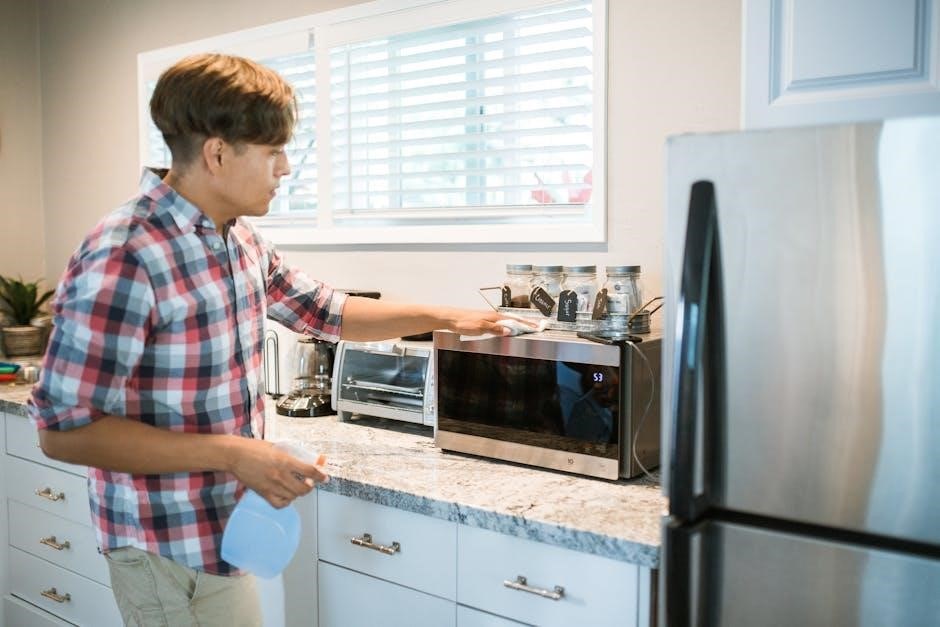
GE Profile oven manuals consistently recommend wiping the interior after each use to prevent food buildup‚ utilizing a damp cloth and mild detergent.
Exterior surfaces should also be cleaned regularly‚ and the turntable and roller ring washed with warm‚ soapy water. Avoid abrasive cleaners‚ as they can damage the interior surfaces‚ according to the JVM1790SKC01 guide.
Deep Cleaning Procedures
GE Profile manuals suggest a more thorough cleaning monthly‚ or as needed‚ utilizing a steam cleaning function if equipped (check model specifics).
Alternatively‚ heat a cup of water with lemon juice for several minutes to loosen grime‚ then wipe clean. Avoid harsh chemicals; the PEB7227DL guide emphasizes gentle cleaning for longevity.
Recommended Cleaning Products
GE Profile oven manuals consistently recommend mild dish soap and warm water as the primary cleaning agents for both interior and exterior surfaces.
Avoid abrasive cleaners‚ scouring pads‚ or harsh chemicals‚ as these can damage the appliance’s finish. A damp cloth is often sufficient; lemon juice can help with stubborn stains.
Troubleshooting Common Issues
GE Profile manuals address issues like heating problems‚ uneven cooking‚ and error codes‚ offering solutions for optimal performance and appliance longevity.
Refer to the manual’s “If Something Goes Wrong” section for guidance before contacting GE service.
Oven Not Heating
If your GE Profile oven isn’t heating‚ the manual suggests checking the power supply and ensuring the door is securely closed; a faulty door switch is a common cause.
Review the manual’s troubleshooting section for specific error codes‚ as these can pinpoint the issue. Resetting the appliance or checking the thermal fuse are also recommended steps before service.
Uneven Cooking
The GE Profile oven manual addresses uneven cooking by recommending proper food placement and utilizing the turntable function for microwave mode.
For convection cooking‚ ensure even air circulation by not overcrowding the oven. Verify the correct temperature setting and consider using oven-safe cookware for consistent results‚ as detailed in the guide.
Error Codes and Their Meanings
The GE Profile oven manual lists specific error codes to diagnose issues. These codes‚ often displayed on the control panel‚ indicate problems ranging from sensor malfunctions to door switch failures.
Consult the manual for a complete list and recommended troubleshooting steps. Ignoring error codes can lead to further damage‚ so prompt attention is crucial for optimal performance.
Safety Precautions
GE Profile manuals emphasize avoiding microwave hazards and following general safety guidelines during operation‚ ensuring user well-being and appliance longevity.
Always review the manual before use for critical safety information and proper handling procedures.
General Safety Guidelines
GE Profile oven manuals strongly advise grounding the appliance and careful supervision when in use‚ particularly around children.
Never operate the oven if the door doesn’t close securely or if there’s damage to the waveguide cover. Avoid heating sealed containers‚ and always use microwave-safe cookware. Regularly inspect the power cord for damage‚ and disconnect before cleaning or servicing.
Avoiding Microwave Hazards
GE Profile manuals caution against operating the oven empty‚ as this can damage the magnetron.
Do not attempt to dry clothing or other flammable materials in the microwave. Steam cleaning‚ if equipped‚ should follow manual instructions precisely. Avoid using metal cookware or utensils‚ and be mindful of superheated liquids which can erupt unexpectedly.
Installation Guidelines (Built-In Models)
GE Profile built-in models (like PEB7227DL) require proper ventilation‚ as outlined in the PVM1790SRSS installation manual‚ and careful electrical connection considerations.
Proper Ventilation Requirements
GE Profile built-in microwave convection oven manuals‚ such as the PVM1790SRSS guide‚ emphasize adequate ventilation for safe operation; This prevents overheating and ensures efficient performance.
Clearances around the unit are crucial; follow the manual’s specifications precisely. Insufficient airflow can damage components and void the warranty‚ so prioritize proper installation.
Electrical Connection Considerations
GE Profile microwave convection oven manuals (like PVM1790SRSS) detail specific electrical requirements for safe installation. A dedicated circuit is often recommended to prevent overloading.
Ensure the voltage and amperage match the oven’s specifications. Improper grounding is a serious hazard; always consult a qualified electrician for connection and adhere to local codes.
Using the Convection Roast Feature
GE Profile oven manuals detail convection roasting‚ offering guidance on food preparation and recommended times/temperatures for optimal results‚ enhancing flavor.
Preparing Food for Convection Roasting
GE Profile manuals emphasize proper food preparation for convection roasting‚ advising users to use low-sided roasting pans for optimal air circulation.
Ensure meats are seasoned and vegetables are lightly oiled; avoid overcrowding the pan to promote even browning and cooking. Refer to your model’s guide for specific recommendations.
Recommended Roasting Times and Temperatures
GE Profile oven manuals provide detailed roasting charts‚ suggesting temperatures between 325°F and 425°F depending on the cut of meat or type of vegetable.
Roasting times vary; poultry may require 15-20 minutes per pound‚ while vegetables typically roast for 20-30 minutes. Always consult your specific model’s guide for precise instructions.
Utilizing the Broil Function
GE Profile manuals emphasize broiling safety‚ recommending close monitoring and appropriate rack positions for optimal browning of foods like steaks and fish.
Safety Considerations When Broiling
GE Profile oven manuals strongly advise against using plastic cookware while broiling‚ as it can melt and cause damage or fire. Always supervise the oven during broiling‚ and never leave it unattended.
Ensure proper ventilation‚ and utilize oven mitts when handling hot cookware. The manual details specific precautions to prevent burns and ensure safe operation of the broil function.
Best Foods for Broiling
GE Profile oven manuals recommend broiling for quick cooking of thinner cuts of meat like steaks‚ chops‚ and fish fillets‚ achieving a delicious‚ browned surface.
Vegetables such as asparagus‚ bell peppers‚ and tomatoes also benefit from broiling‚ developing a slightly charred flavor. The manual suggests adjusting rack position for optimal results.
Defrosting with Your GE Profile Oven
GE Profile manuals detail both weight and time defrosting options‚ ensuring even thawing of meats‚ poultry‚ and frozen foods for optimal cooking results.
Weight Defrosting
GE Profile oven manuals explain weight defrosting utilizes sensors to automatically calculate defrosting time based on the food’s weight‚ entered via the control panel.
This feature‚ found in models like JVM1790SKC01‚ minimizes guesswork and prevents over- or under-defrosting‚ ensuring food safety and texture. Refer to your manual for specific guidelines.
Time Defrosting
GE Profile microwave oven manuals detail time defrosting‚ allowing users to manually set the defrosting duration when the food’s weight is unknown or the sensor isn’t ideal.
This method‚ applicable to models like PEB7227DL‚ requires monitoring and potentially flipping the food for even defrosting. Consult your manual for recommended power levels and timing.
Accessories and Optional Features
GE Profile manuals highlight available racks and trays‚ enhancing cooking versatility. Some models feature a steam cleaning function for simplified maintenance.
Available Racks and Trays
GE Profile oven manuals detail various rack and tray options designed to maximize cooking space and efficiency. These accessories‚ often sold separately‚ include a convection rack for improved air circulation during baking and roasting.
Additionally‚ specialized trays are available for broiling or capturing drips‚ ensuring easy cleanup. Refer to your specific model’s manual for compatible accessories and proper usage instructions.
Steam Cleaning Function (if applicable)
GE Profile microwave convection oven manuals may describe a steam cleaning function‚ designed for simplified interior maintenance. This feature utilizes steam to loosen food splatters and residue‚ making wiping easier.
Consult your model’s specific guide for detailed instructions on activating and utilizing the steam clean cycle‚ including recommended water levels and cycle durations for optimal results.
Warranty Information
GE Profile oven manuals detail warranty coverage‚ claim procedures‚ and service numbers. Review your documentation for specifics on parts and labor protection.
GE.com provides access to warranty details and claim filing information for GE appliances.
Coverage Details
GE Profile microwave convection oven warranties typically cover defects in materials and workmanship for a specified period‚ often one year for parts and labor.
Extended warranties may be available for purchase‚ offering additional protection. Manuals outline what is covered‚ including components and potential exclusions‚ like cosmetic damage or improper use. Always register your appliance to activate warranty coverage.
How to File a Warranty Claim
To file a claim‚ first consult your GE Profile microwave oven’s manual for specific instructions and required documentation. Typically‚ you’ll need proof of purchase and a detailed description of the issue.
Contact GE Service via phone or their website; the manual provides contact numbers. Be prepared to provide your model and serial number for efficient processing of your warranty request.