

Understanding Sciatica and the Role of Stretches
Sciatica, often debilitating, stems from sciatic nerve irritation, causing pain radiating down the leg. Stretches, as advised by physical therapists, offer relief by addressing muscle imbalances and nerve compression.
What is Sciatica?
Sciatica isn’t a condition itself, but rather a symptom of an underlying issue affecting the sciatic nerve – the largest nerve in the body, extending from the lower back, through the buttocks, and down each leg. This nerve is crucial for providing sensation and enabling movement in these areas.
The pain associated with sciatica arises when this nerve becomes compressed or irritated. This irritation can manifest as a sharp, shooting pain, a burning sensation, or even tingling, often radiating from the lower back down one leg. Some individuals experience numbness as well. The intensity can vary greatly, from mild discomfort to debilitating pain that interferes with daily activities like walking, bending, or even sitting.
Several factors can contribute to sciatic nerve irritation, making it a complex issue. Understanding the root cause is vital for effective treatment, and often, targeted stretches play a significant role in alleviating the discomfort and restoring function.
Causes of Sciatic Nerve Irritation
Sciatic nerve irritation frequently stems from compression, often due to a herniated disc in the spine pressing on the nerve roots. Spinal stenosis, a narrowing of the spinal canal, can also contribute to this compression, impacting nerve function.
However, direct compression isn’t the only culprit. The piriformis muscle, located in the buttock, can irritate the sciatic nerve if it becomes tight or spasms – a condition known as piriformis syndrome. This muscle sits near the sciatic nerve, and tightness can put pressure on it.

Other potential causes include spinal misalignments, injuries to the lower back, and even pregnancy, which can place increased pressure on the lower spine. Less commonly, tumors or infections can also irritate the sciatic nerve. Identifying the specific cause is crucial for tailoring an effective treatment plan, often incorporating targeted stretches.
Common Symptoms of Sciatica
Sciatica typically manifests as pain that radiates along the sciatic nerve, originating in the lower back and extending down the buttock and into the leg. This pain can vary significantly – from a mild ache to a sharp, burning sensation, or even a debilitating, shooting pain.
Beyond pain, individuals often experience numbness or tingling sensations in the affected leg, foot, or toes. Weakness in the leg or foot muscles is also a common symptom, potentially causing difficulty with walking or standing. Some may find bending forward exacerbates the pain, while others struggle with prolonged sitting.
The location and intensity of symptoms can differ depending on the site of nerve compression. It’s important to note that symptoms can be intermittent, flaring up and subsiding, or they may be constant. Recognizing these symptoms is the first step towards seeking appropriate relief and implementing targeted stretches.
Stretches for Sciatica Relief: A Comprehensive Guide
Targeted stretches, recommended by physical therapists, can alleviate sciatic pain by releasing compressed nerves and easing muscle tension, promoting improved mobility and comfort.
Warm-up Exercises Before Stretching
Prior to initiating any sciatic nerve stretches, a proper warm-up is crucial for preparing your muscles and enhancing flexibility, minimizing the risk of injury. Begin with five to ten minutes of low-impact cardiovascular activity, such as walking or gentle cycling, to increase blood flow to the lower back and legs.
Follow this with dynamic stretches, focusing on movements that mimic the stretches you’ll be performing later. Examples include gentle torso twists, leg swings (forward, backward, and sideways), and knee circles. These movements help to loosen tight muscles and improve range of motion.
Remember to perform each warm-up exercise slowly and deliberately, paying attention to your body’s signals. Avoid pushing yourself too hard, especially if you’re experiencing acute pain. A well-executed warm-up will significantly improve the effectiveness of your stretching routine and contribute to a safer, more comfortable experience.
Piriformis Stretch
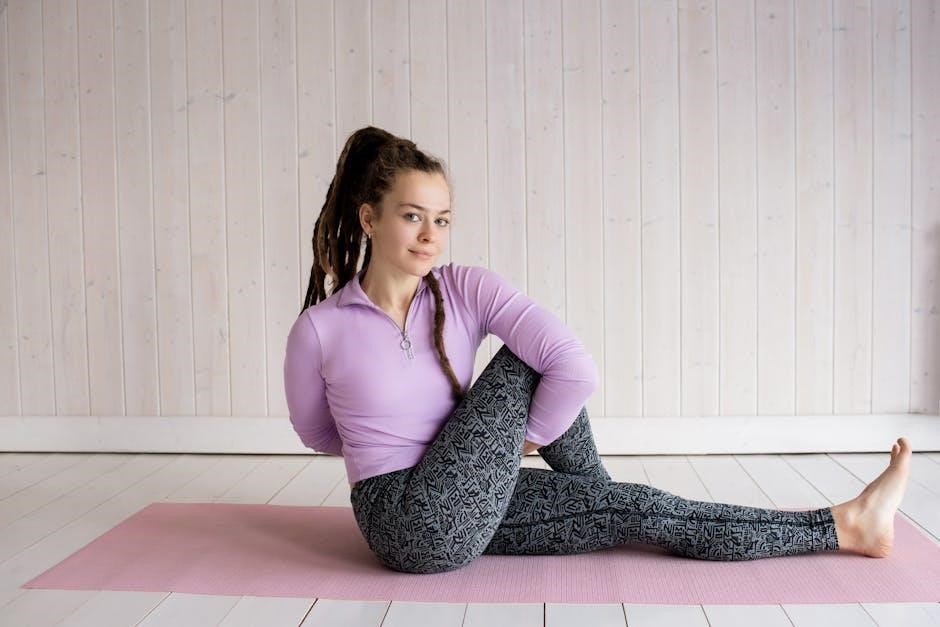
The piriformis muscle, located deep in the buttock, can often irritate the sciatic nerve when tight or spasmed. Stretching this muscle is a cornerstone of sciatica relief. Two effective variations exist: seated and supine. Both aim to lengthen the piriformis, alleviating pressure on the nerve.

Understanding the connection between a tight piriformis and sciatic pain is key. The sciatic nerve actually runs under or through this muscle in many people. Therefore, releasing tension in the piriformis can directly reduce nerve compression and associated discomfort. Consistency is vital for noticeable improvements.
These stretches should be performed gently, avoiding any sharp or increasing pain. Focus on feeling a stretch in the buttock, not down the leg. Holding each stretch for 30 seconds, repeating 2-3 times, will maximize benefits. Proper form is paramount to prevent further irritation.
Seated Piriformis Stretch
To perform the seated piriformis stretch, begin by sitting upright on a chair with your feet flat on the floor. Gently cross your affected leg over the opposite knee, forming a figure-four shape. Maintain a straight back and avoid rounding your shoulders. Slowly lean forward from the hips, keeping your back straight, until you feel a stretch in your buttock.

The intensity of the stretch should be moderate – you should feel it, but not experience sharp pain. Hold this position for approximately 30 seconds, breathing deeply throughout. Repeat the stretch 2-3 times on each side, even if only one side is affected, to maintain muscle balance.
Modifications can be made by adjusting how far you lean forward. If the stretch is too intense, reduce the forward lean. Ensure the opposite foot remains firmly planted on the floor for stability. This stretch effectively targets the piriformis muscle, potentially easing sciatic nerve compression.
Supine Piriformis Stretch
Begin the supine piriformis stretch by lying on your back with your knees bent and feet flat on the floor. Cross your affected leg over the opposite thigh, just above the knee, creating a figure-four position. Gently pull the thigh of the uncrossed leg towards your chest, interlacing your fingers behind it or over your shin.
Continue pulling until you feel a noticeable stretch in the buttock of the crossed leg. Maintain a relaxed head and shoulders, keeping your lower back pressed gently into the floor. Avoid jerking or bouncing movements; the stretch should be slow and controlled.
Hold the stretch for 30 seconds, focusing on deep, even breaths. Repeat this process 2-3 times on each side. If you find the stretch too intense, reduce the amount you pull your thigh towards your chest. This stretch is excellent for releasing tension in the piriformis muscle, potentially alleviating sciatic discomfort.
Hamstring Stretches
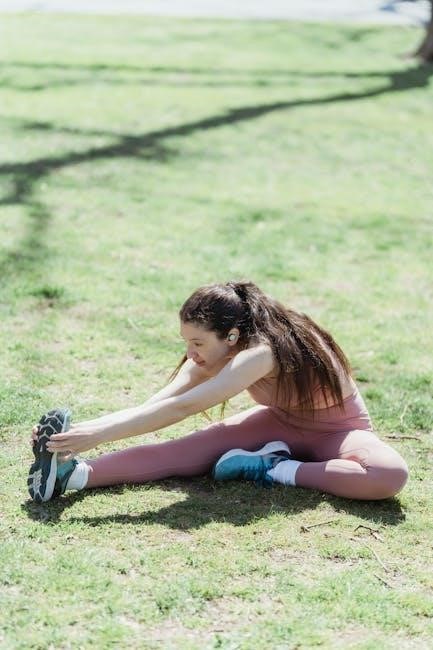
Tight hamstrings frequently contribute to sciatic pain, increasing tension on the lower back and potentially irritating the sciatic nerve. Incorporating regular hamstring stretches into your routine can help alleviate this pressure and improve flexibility. Remember to perform these stretches gently and avoid overextending.
Hamstring flexibility is crucial for proper posture and movement. When hamstrings are tight, they can pull on the pelvis, exacerbating lower back pain and sciatic symptoms. Consistent stretching can restore a more natural alignment, reducing nerve compression.
We will explore both standing and lying hamstring stretches to provide options suitable for different levels of flexibility and comfort; Prioritize controlled movements and listen to your body, stopping if you experience any sharp or worsening pain. These stretches, when performed correctly, can be a valuable component of your sciatica management plan.
Standing Hamstring Stretch
To perform a standing hamstring stretch, begin by standing with your feet hip-width apart. Gently extend one leg straight out in front of you, keeping a slight bend in the knee to avoid locking it. Hinge at your hips, keeping your back straight, and lean forward until you feel a stretch in the back of your thigh.
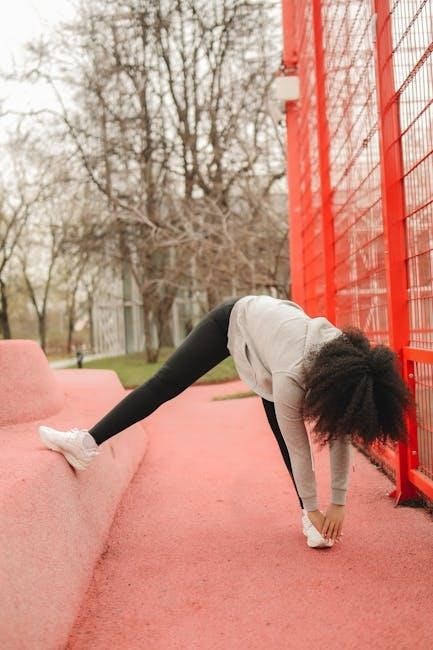
Avoid rounding your back during this stretch; maintain a neutral spine to prevent further irritation of the sciatic nerve. Hold the stretch for 20-30 seconds, breathing deeply and relaxing into the movement. Repeat on the other leg. This stretch targets the hamstring muscles directly, helping to improve flexibility.
For a deeper stretch, you can slightly rotate your extended leg inward or outward. However, be cautious and avoid any movements that cause pain. Remember to listen to your body and modify the stretch as needed. Consistency is key for seeing improvements.
Lying Hamstring Stretch with Towel
This gentle hamstring stretch is excellent for those finding traditional stretches challenging. Lie on your back with your knees bent and feet flat on the floor. Loop a towel or resistance band around the ball of one foot. Keeping your knee slightly bent, gently pull back on the towel, straightening your leg as much as comfortable.
You should feel a stretch along the back of your thigh. Maintain a neutral spine, pressing your lower back into the floor to avoid strain. Hold this position for 20-30 seconds, breathing deeply and allowing the muscles to relax. Repeat 2-3 times on each leg.
The towel assists in achieving a controlled stretch without overexertion. If you feel any sharp pain, ease off the stretch immediately. This variation is particularly helpful for individuals with limited flexibility or acute sciatica symptoms, promoting gentle relief.
Lower Back Stretches

Targeting the lower back muscles is crucial when managing sciatica, as tightness here can exacerbate nerve compression. These stretches aim to improve flexibility and reduce tension in the lumbar region, providing relief from radiating pain. Remember to perform these movements slowly and with controlled breathing, stopping if you experience any sharp discomfort.
Effective lower back stretches include the knee-to-chest stretch, which gently decompresses the spine, and pelvic tilts, which strengthen core muscles and improve spinal stability. These exercises help restore proper alignment and reduce pressure on the sciatic nerve.
Consistent practice of these stretches, alongside other recommended exercises, can significantly contribute to long-term sciatica management and improved quality of life. Always listen to your body and avoid pushing yourself beyond your limits.
Knee-to-Chest Stretch
The knee-to-chest stretch is a gentle yet effective exercise for relieving lower back pain associated with sciatica. To perform this stretch, lie flat on your back with your knees bent and feet flat on the floor. Slowly bring one knee towards your chest, gently clasping your hands behind your thigh or shin.
Hold this position for 20-30 seconds, feeling a mild stretch in your lower back and hip. Repeat on the other side. You can also perform this stretch by bringing both knees to your chest simultaneously for a deeper stretch, but proceed with caution.
This stretch helps to decompress the spine, relieving pressure on the sciatic nerve. Remember to breathe deeply throughout the exercise and avoid forcing the movement. It’s a foundational stretch for improving lower back flexibility and reducing sciatica symptoms.
Pelvic Tilts
Pelvic tilts are a simple, yet powerful exercise to alleviate sciatica pain by gently mobilizing the lower back and strengthening core muscles. Lie on your back with your knees bent and feet flat on the floor, maintaining a neutral spine. Engage your abdominal muscles and gently flatten your lower back against the floor, tilting your pelvis upwards.
Hold this position for a few seconds, then relax and allow a small natural arch to return to your lower back. Repeat this tilting motion 10-15 times, focusing on controlled movements. This exercise improves spinal mobility and reduces pressure on the sciatic nerve.
Pelvic tilts can be performed anywhere and require no equipment, making them a convenient exercise for daily sciatica management. Remember to breathe deeply throughout the exercise and avoid any sharp or sudden movements.
Nerve Gliding Exercises
Nerve gliding exercises, also known as nerve flossing, are crucial for sciatica relief as they help restore the sciatic nerve’s mobility within its surrounding tissues. These movements gently encourage the nerve to slide and glide, preventing adhesions and reducing compression. Start by sitting with your legs extended, then gently flex your foot towards your shin.
Next, point your toes downwards and slightly flex your head towards your chest. Slowly alternate between these positions, creating a gliding sensation along the nerve pathway. Repeat this sequence 10-15 times, ensuring movements are slow and controlled, avoiding any sharp pain.
Nerve gliding isn’t a stretch; it’s about mobilizing the nerve itself. It’s vital to listen to your body and stop if you experience increased pain or discomfort. Proper technique is key to avoid exacerbating symptoms.
Sciatic Nerve Flossing (Gentle Movements)
Sciatic nerve flossing, a specific nerve gliding exercise, aims to improve the nerve’s ability to move freely through its pathway. Begin seated, extending one leg straight out while keeping the other bent. Gently point your toes on the extended leg towards your shin, then towards the ceiling.
Simultaneously, flex your head forward, bringing your chin towards your chest, and then extend it back. Coordinate these movements, creating a “flossing” sensation along the sciatic nerve. Repeat this 10-15 times, maintaining slow, controlled motions.
Crucially, this exercise shouldn’t cause pain; a mild stretch is acceptable. If you experience sharp or radiating pain, stop immediately. Focus on the gliding sensation, not on stretching the nerve itself. Proper form prevents aggravation and promotes nerve health, aiding in sciatica symptom management.
Spinal Decompression Stretches
Spinal decompression stretches gently create space between the vertebrae, relieving pressure on the sciatic nerve. The Cat-Cow stretch is a prime example, promoting spinal mobility and reducing nerve compression. Start on your hands and knees, with a neutral spine.
Inhale as you drop your belly towards the floor, arching your back and lifting your head and tailbone (Cow pose). Exhale as you round your spine towards the ceiling, tucking your chin to your chest and drawing your navel in (Cat pose). Repeat this flowing movement 10-15 times.
Focus on controlled breathing and gentle movements, avoiding any forceful arching or rounding. This stretch improves spinal flexibility and can alleviate sciatica pain by reducing nerve irritation. Regular practice supports a healthier spine and promotes nerve function.
Cat-Cow Stretch
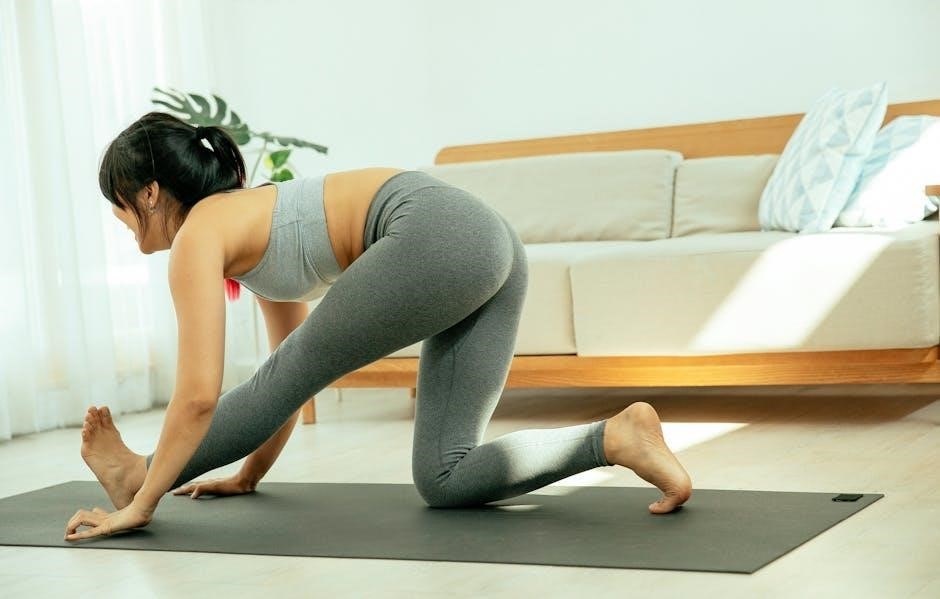
The Cat-Cow stretch is a gentle, flowing movement that promotes spinal mobility and decompression, offering relief from sciatica. Begin on your hands and knees, ensuring your hands are shoulder-width apart and knees are hip-width apart, maintaining a neutral spine.
As you inhale, drop your belly towards the floor, arching your back and lifting your head and tailbone – this is Cow pose. Exhale while rounding your spine towards the ceiling, tucking your chin to your chest and drawing your navel inward – this is Cat pose.
Synchronize your breath with the movement, feeling each vertebra articulate. Repeat this sequence 10-15 times, focusing on smooth transitions and controlled breathing. This stretch gently expands and contracts the spine, relieving pressure on the sciatic nerve and easing discomfort.
Stretches to Avoid with Sciatica
Certain stretches can exacerbate sciatica symptoms, so awareness is crucial. Deep forward bends, especially while seated and reaching for toes, can increase pressure on the sciatic nerve, intensifying pain. Avoid full spinal twists, particularly if they cause radiating discomfort down the leg; gentle rotation is preferable.
High-impact stretches, like ballistic movements or forceful hamstring stretches, should be avoided as they can irritate the nerve. Be cautious with stretches that significantly aggravate your pain; listen to your body and stop immediately. Furthermore, avoid any stretch that causes numbness or tingling to worsen.
Prioritize gentle, controlled movements and focus on stretches specifically designed for sciatica relief. Always consult with a physiotherapist before starting any new exercise regimen to ensure safety and effectiveness, tailoring stretches to your specific condition.
Frequency and Duration of Stretches
Consistency is key when incorporating stretches for sciatica relief into your routine. Aim to perform these stretches daily, ideally 2-3 times per day, to maintain flexibility and reduce nerve compression. Each stretch should be held for 20-30 seconds, allowing the muscles to lengthen and release tension gradually.
Begin with a gentle warm-up before stretching, preparing the muscles for movement and minimizing the risk of injury. Avoid bouncing or forcing the stretch; focus on a slow, controlled extension. Listen to your body and adjust the duration or intensity as needed, respecting your pain limits.
Over time, you may gradually increase the hold time or repetitions as your flexibility improves. However, remember that consistency is more important than intensity; regular, moderate stretching yields better long-term results.
Important Considerations & Safety Precautions
Prioritize proper form over depth when performing sciatica stretches; incorrect technique can exacerbate pain. Always warm up muscles beforehand to enhance flexibility and reduce injury risk. Stop immediately if you experience sharp, worsening pain, numbness, or tingling during any stretch.
Individuals with pre-existing medical conditions, such as spinal stenosis or herniated discs, should consult a healthcare professional before starting a stretching program. Avoid stretches that significantly aggravate your symptoms, and listen attentively to your body’s signals.
Gradual progression is crucial; don’t push yourself too hard, too soon. Maintain good posture throughout the day to support spinal health and minimize nerve compression. Remember, these stretches are intended to complement, not replace, professional medical advice.
When to Seek Professional Help (Physiotherapist)
Consult a physiotherapist if your sciatica pain is severe, unrelenting, or progressively worsening despite consistent stretching and self-care measures. Seek immediate medical attention if you experience loss of bowel or bladder control, accompanied by leg weakness or numbness – these could indicate a serious condition like Cauda Equina Syndrome.
A physiotherapist can accurately diagnose the underlying cause of your sciatica and develop a personalized treatment plan tailored to your specific needs. They can provide targeted stretches, manual therapy, and postural guidance to optimize recovery.
Professional guidance is particularly beneficial if your pain interferes significantly with daily activities, or if you’re unsure about the correct form for performing stretches. Don’t hesitate to seek expert help to ensure safe and effective management of your sciatica, preventing long-term complications.

Resources for Sciatica Stretches (PDF Downloads)
Accessing reliable resources is crucial for safe and effective sciatica management. Numerous websites offer downloadable PDF guides detailing various stretches and exercises. Mayo Clinic provides a comprehensive overview of sciatica and associated stretches, available for free download on their website. Similarly, the American Academy of Orthopaedic Surgeons offers patient education materials, including illustrated stretching guides.
Websites like “Shift Wellness” (featuring Dr. Rachel Tavel, DPT) often provide downloadable PDFs with specific exercise routines for sciatica relief. Always prioritize resources from reputable medical institutions or qualified healthcare professionals. Ensure the PDF includes clear instructions, illustrations, and safety precautions.
Before starting any new exercise program, review the PDF with your doctor or physiotherapist to ensure it’s appropriate for your condition. Remember, these PDFs are supplementary tools and shouldn’t replace personalized medical advice.